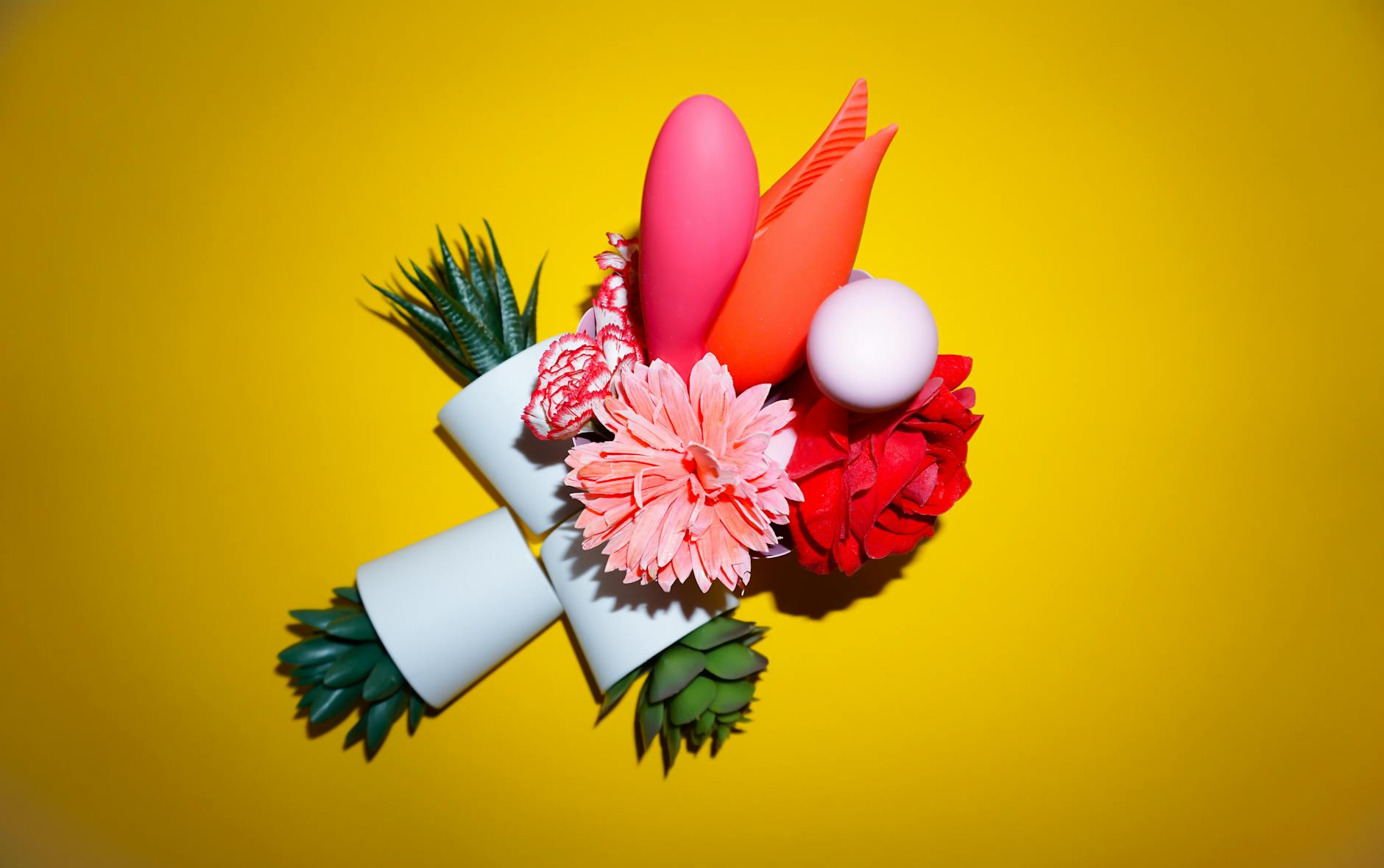
Let's settle this once and for all
Your fingers have been there from the start. They know the terrain, they adjust on instinct, and they're always available. A lemon vibrator is newer to the party, unintuitive at first, and costs actual money. So which one actually works better for solo pleasure?
Honestly, the answer isn't either-or. But the science around vibration, nerve response, and solo satisfaction does reveal something interesting about why people switch from manual stimulation to a tool like a lemon clitoral vibrator, and when you might want to use both.
What your fingers do really well
Manual stimulation is intuitive because your brain and your hand are talking constantly. You apply pressure, feel feedback immediately, and adjust. Your fingers can move in patterns you invented, at paces your body creates, with pressure that responds to arousal in real time. There's a flow state to it that's genuinely hard to replicate.
Your fingers also offer something a vibrator doesn't: variable touch. You can use the flat of your palm, switch to fingertips, add pressure with your whole hand, or barely graze the skin. That variability is psychologically satisfying and physically useful for people who find constant stimulation boring or overstimulating.
For many people, fingers are deeply associated with their first experiences of pleasure. That muscle memory, that confidence, is real and worth acknowledging. There's no shame in preferring manual stimulation.
What a lemon vibrator adds that fingers can't
Vibration operates on a different neurological pathway than pressure or friction. When a lemon vibrator is on, it's sending repeated micro-stimulations to the nerves in your vulva at frequencies your hand physically cannot match. Most clitoral vibrators operate between 3,000 and 10,000 vibrations per minute. Your hand, even if you're very rhythmic, maxes out around 300 to 400.
That difference matters. Some nerve fibers respond better to vibration than to sustained pressure. For people with reduced sensation, decreased libido, or vulvas that have become less responsive over time, a lemon clitoral vibrator can wake up nerve endings that manual stimulation alone won't reach.
A lemon vibrator also removes the arm fatigue factor. If you're someone whose wrist, shoulder, or hand gets tired before you finish, a vibrator is not a concession—it's a solution. Solo pleasure should never mean pain or strain.
There's also a psychological shift. Some people find that handing off the stimulation to a device lets them relax more deeply into sensation. Your brain isn't managing the motion anymore. You're just receiving. That mental break can actually deepen the experience.
The research on vibrators versus manual stimulation
Studies comparing orgasm rates with and without vibrators consistently find the same pattern: more people reach orgasm with vibration than without. A 2009 study in the Journal of Sexual Medicine found that women using vibrators reported higher orgasm rates and greater satisfaction than those relying solely on manual stimulation.
But here's the nuance: that doesn't mean vibrators are "better." It means vibrators are different, and for some bodies and brains, that difference translates to easier access to orgasm. If you've never had difficulty reaching climax with your fingers, a vibrator might feel nice but not revolutionary. If you've spent years not quite getting there, or if sensation has shifted with age or medication, a lemon vibrator can feel like discovering a door you didn't know existed.
The research also shows something called "desensitization with repetitive use." If you use the same tool at the same intensity every single time, your nerves adapt and the sensation becomes less intense. Your fingers don't have this problem quite as acutely because you're always varying slightly. A vibrator can, over time, feel less effective if you use the same pattern endlessly.
When you might want both
Here's what I see most often in clinical practice: people who have access to both—fingers and a tool like a lemon vibrator—report the most satisfaction and the most variety in their solo pleasure.
You might start with your fingers. Build arousal manually. Feel into your own rhythm. Then, when you want to intensify or shift the sensation, introduce vibration. That hybrid approach uses both the intuitive responsiveness of your hand and the neurological kick of vibration.
Or you might use a lemon vibrator for a few weeks and find that when you return to manual stimulation, it feels fresh again. The nerves aren't habituated. The sensation returns to its original intensity.
Some people use vibrators for partnered sex or specific scenarios, and fingers for everyday solo pleasure. Others do the opposite. There's no rule here except your own preference.
One thing worth noting: if you've been using a vibrator for months and everything feels numb, switching back to fingers for a couple of weeks—or trying a different vibrator pattern on your lemon clitoral vibrator—often restores sensation quickly. Your body isn't broken. It's just adapted. Variation fixes that.
The pleasure permission piece
I work with people across decades of age, and here's something I notice repeatedly. Women over 35 often apologize for "needing" a vibrator. They frame it as a problem, as if their body failing to respond to fingers is a sign of inadequacy.
It's not. Your body changes. Your nervous system changes. Medications, hormones, stress, and time all shift how pleasure works. Using a lemon vibrator isn't admission of defeat. It's the same logic as using reading glasses. Your eyes changed. You adapted.
Let me be direct: the best tool for solo pleasure is the one that gets you there. If that's your fingers, excellent. If that's a lemon vibrator, also excellent. If that's both, used together in whatever pattern feels good, that's the whole point.
Photo by Hanna Brovko on Pexels
How to choose if you're on the fence
If you've never used a vibrator and you're curious, a few things to consider:
Do you have sensation changes you've noticed? If yes, a lemon vibrator is worth trying. Do you find your hand gets tired before pleasure peaks? Also a strong signal. Do you experience delayed orgasm or difficulty reaching climax? Vibration often helps. If none of those apply and your current approach is working, you don't have to change anything.
Start with a tool designed for your anatomy. A lemon clitoral vibrator is curved, focused, and non-intimidating if you're new to vibrators. The learning curve is short because the device is intuitive. Many people who say they "don't like vibrators" simply haven't found the right one.
When you do try one, give yourself permission to experiment. Not every pattern will feel good. Not every intensity. That's not failure—that's data. Your job is to find what works, not to force yourself to like something that doesn't.
The final answer
A lemon vibrator isn't better than your fingers. It's different. For some people, that difference is life-changing. For others, fingers are perfect and always will be. The pleasure part of your life doesn't require you to choose. It requires you to pay attention to what actually feels good, without judgment or comparison.
Your solo pleasure is yours alone. The only right way is the way that works for your body. If that includes exploring what a lemon vibrator offers, wonderful. If it doesn't, equally wonderful. The point is permission, exploration, and zero apology.
Want to dig deeper into how to use different tools together, or how to address sensation changes? We're here. Your pleasure matters, and you deserve the information to make it work exactly how you want.
People also ask
Can a lemon vibrator cause numbness if I use it too much?
Short answer: not permanent numbness, but temporary desensitization is real. If you use the same vibrator at the same intensity every single day for weeks, the nerves in your vulva adapt and the sensation becomes less intense. That's not damage—it's your body adjusting to repeated stimulation. The fix is simple: switch to a different pattern, lower the intensity, or take a break for a few days. When you return, the sensation is usually back to baseline. This is why variety matters. Rotating between your fingers, different vibration patterns, and different toys keeps sensation fresh.
Is it normal to need a vibrator when you never did before?
Completely normal. Your body changes. Hormones shift, medications affect nerve sensitivity, stress impacts arousal, and time itself rewires how your nervous system responds. Many people find that what worked in their 20s doesn't work the same way at 35 or 45. That's not dysfunction. That's biology. If you suddenly need vibration where you didn't before, it's worth noticing if anything else changed—stress, medication, sleep, relationship status—but it's also worth simply accepting that your body evolved and adapting your approach accordingly.
Do lemon vibrators work better than other vibrators for solo use?
Lemon vibrators are particularly good for solo pleasure because the shape is designed to be easy to maneuver, the suction pattern is intense without being overwhelming, and the learning curve is short. That said, "best" is personal. Some people prefer wand vibrators, some prefer internal vibrators, some prefer precise clitoral stimulation. If you're choosing a vibrator for solo pleasure, focus on what kind of stimulation appeals to you—gentle versus intense, broad versus focused—and test from there. Many people find that after trying a few, they return to a lemon clitoral vibrator because the suction sensation offers something different that fingers absolutely cannot replicate.
Can using a lemon vibrator affect my ability to orgasm with my fingers again?
No. Vibrators don't "ruin" your sensitivity to manual touch. What can happen is temporary habituation—if you use a vibrator at high intensity constantly, your nerves adapt to that level of input and lighter touch feels less intense by comparison. But that adaptation works both ways. If you switch back to fingers or lower vibration patterns, your sensitivity recalibrates within a few days to a couple of weeks. Your body is adaptable, not damaged.
What's the actual difference between a lemon vibrator and other clitoral toys?
The main difference in a lemon vibrator is the stimulation method. Most traditional vibrators use mechanical vibration. A lemon vibrator uses suction and pulsing patterns that mimic a different kind of sensation entirely. Many people report that suction feels more focused, less numb-inducing over time, and more closely mimics certain kinds of manual stimulation. It's not objectively "better," but for people who find traditional vibration overstimulating or less effective, lemon vibrators often work where other toys didn't. That's why they've developed such a dedicated user base.
Is it okay to prefer solo pleasure with a vibrator over partnered sex?
Completely okay. Your solo pleasure is yours. Some people find that vibrators work better alone because there's no external pressure to perform or time constraint. Others use vibrators with partners but prefer fingers solo. There's no hierarchy here. The only issue is if you prefer solo pleasure with a vibrator specifically because partnered sex has become uncomfortable or disconnected. That's worth addressing separately—with your partner, a sex educator, or a therapist—because that's a relationship dynamic question, not a vibrator question. But if you simply enjoy vibrators alone and other touch with partners, that's just preference. Honor it.