Let's name what's happening
After a breakup, your body doesn't always know it's safe. Even when your brain understands the relationship is over, your nervous system might still be in protection mode. Touch that used to feel good can suddenly feel triggering, exposed, or just wrong. That's not broken. That's a normal grief response.
The question isn't whether you should jump back into solo pleasure. It's how to rebuild that relationship with yourself in a way that feels consensual, gradual, and actually healing.
Why your touch sensitivity shifts after heartbreak
When you've been intimate with a specific person for months or years, your nervous system learns their rhythm, their pressure, their patterns. That becomes your baseline for what "touch" means. When the relationship ends, your body doesn't just forget that conditioning. It can become hypervigilant around touch itself.
You might also be holding onto anger, sadness, or ambivalence about the relationship. That emotional weight lives in your body. Touching yourself can feel like you're touching the relationship itself. Or it can feel like you're claiming something that used to belong to "you two."
Add shame to the mix. Many people internalize breakup scripts: "I shouldn't want anything right now," "I need to be sad first," "Pleasure feels disrespectful to the hurt I'm carrying." None of that is true. Pleasure and grief coexist. They're not competing.
The nervous system rebuild
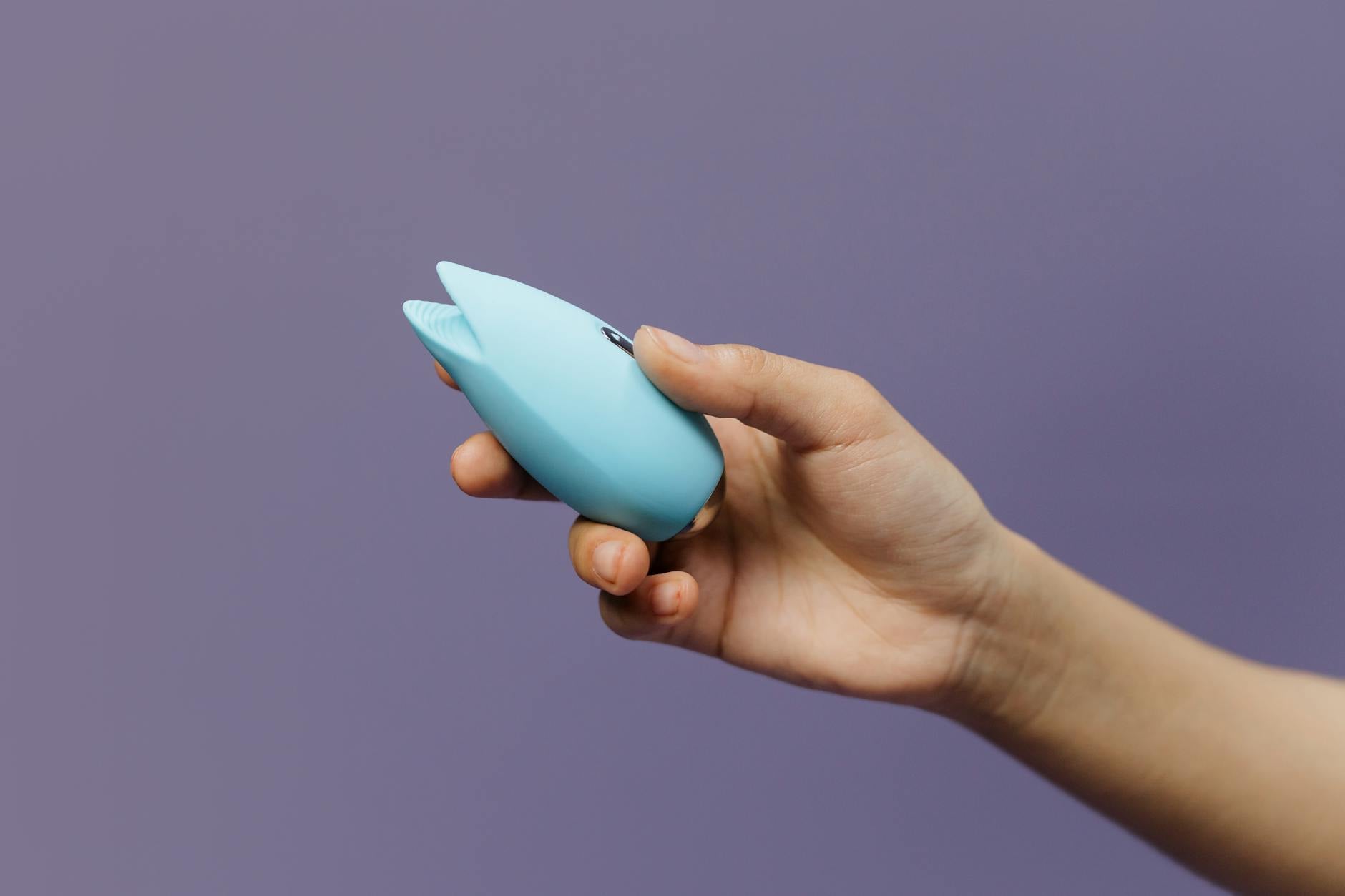
Your lemon vibrator works differently than your hands. That's the whole point right now.
A clitoral vibrator like the Lem creates consistent, external stimulation that doesn't require you to perform or direct the touch. You're not doing anything to yourself. You're receiving sensation. That subtle shift is enormous for post-breakup recovery. It removes the psychological weight of active touch and lets you just... feel.
The best vibrators for this phase are ones with clear, simple controls and patterns that feel predictable. You want to know exactly what's coming next. No surprises. The Lem's straightforward settings and the way it focuses stimulation without being invasive makes it ideal for rebuilding trust with your own body.
Honestly, that sense of control is what allows your nervous system to relax enough to feel anything at all.
Four stages of reclaiming pleasure
Stage One: Context matters more than sensation.
Don't aim for orgasm yet. Aim for safety. Set up your space intentionally. Alone, door locked, phone off. A comfortable position where you're not reaching or contorting. Soft light, or darkness if that feels better. Temperature matters. A blanket, comfortable clothes that you can slip off. This is about telling your body, "I am safe right now. I am alone. I am in control of what happens."
Spend three to five days just being in that space without the vibrator. Let your body learn that alone-time is good, that you can be comfortable in your own touch without performance or expectation.
Stage Two: Introduction without activation.
Bring the lemon vibrator into the space. Don't use it yet. Hold it. Look at it. Feel the weight and texture in your hand. Let it sit next to you. This sounds slow, and it is. That's the point. Your nervous system needs to categorize this as "a tool for my pleasure," not "a replacement for him" or "proof that I'm moving on."
When you're ready, hold it against your inner arm or the back of your hand. Somewhere neutral. Get used to how the vibration feels when you're not in an erotic headspace. Notice the sensation without trying to feel turned on. If this takes a week, that's normal.
Stage Three: Gradual external contact.
When touching feels less loaded, try the Lem on the outer labia at the lowest setting. Not the clitoris yet. Outer edges. Sides of the vulva. Places that feel less directly vulnerable. Stay there for a minute or two. No pressure to progress.
You might feel nothing. You might feel numb or irritated. Both are fine. Your body is relearning. If at any point it feels unsafe or wrong, stop. There's no medal for pushing through.
Stage Four: Slow integration into pleasure.
Once the outer contact feels neutral or slightly pleasant, try moving to the clitoris at the lowest pattern. The Lem's suction-based design is gentler here than traditional vibrators. It doesn't feel like friction. It feels like a pulse. Less invasive. You're working with your body, not forcing stimulation.
If you get aroused, great. Sit with it. You don't have to do anything with it. If you feel turned on and then feel bad about that, pause. Notice the guilt without acting on it. Pleasure isn't betrayal. It's reclamation.
Three things that help the most
First, separate the Lem from the person. The vibrator is not his touch, not a replacement, not a sign that you're "over it." It's a tool you're using to rebuild your own nervous system. Completely different category. Naming this explicitly in your mind matters more than you'd expect.
Second, pair the experience with something grounding. Many people find it helps to use the vibrator while listening to a specific playlist, a podcast, or an audiobook. Something that anchors you in the present moment and keeps your brain from spiraling into memories or what-ifs. The sensory input helps.
Third, give yourself permission to feel nothing for a while. Numbness after heartbreak isn't permanent, and it's not a problem that needs fixing right now. Some people take weeks or months before pleasure feels accessible again. That's completely normal. Forcing it or shaming yourself for not feeling it won't speed it up.
When shame shows up
You might hear an internal voice saying that using a vibrator after a breakup is sad, or desperate, or a sign that you're not moving on. That voice is wrong. Solo pleasure is literally one of the most self-protective, pro-healing things you can do.
You're telling your body that your pleasure matters independent of another person. You're practicing consent with yourself. You're learning your own rhythm again. That's the opposite of desperation. That's resilience.
If the shame is coming from a partner or ex who made you feel bad about your pleasure, or if you internalized messages that solo sex was wrong, this is your chance to unlearn that. Your pleasure is yours. Full stop.
The timeline reality
Some people feel ready to explore solo pleasure within days of a breakup. Others need months. Both are okay. There's no "right" pace for rebuilding intimacy with yourself. Your job is to listen to what your body is actually telling you, not what you think you should be feeling.
When you're ready to move forward, the lemon vibrator is there. If you need to pause and come back later, that's also fine. The Lem isn't going anywhere.
FAQ
How long should I wait after a breakup before using a vibrator?
There's no magic waiting period. Some people use pleasure as part of the healing process immediately. Others need time to sit with sadness first. The question to ask yourself is: do I feel like I'm choosing this, or do I feel like I'm running from pain? If you're genuinely interested in reconnecting with your body, go ahead. If you're using it to avoid grief, it might be worth waiting until you've felt some of the harder emotions first.
What if using a vibrator makes me think about my ex?
That's completely normal. Your body has muscle memory. You might feel phantom sensations or find your mind wandering to the relationship. Don't judge yourself for it. Notice it, then gently redirect your attention back to the present moment. Over time, the association weakens. Solo pleasure becomes its own experience, separate from the relationship.
Can I use a lemon clitoral vibrator if I still have feelings for my ex?
Absolutely. Feelings and pleasure aren't mutually exclusive. You can still care about someone and also be exploring your own body. There's no betrayal in that. Your pleasure belongs to you, regardless of what you're feeling emotionally. The lemon vibrator is for you now, not him.
Is it weird to use a vibrator alone after being in a couple for so long?
Not even slightly. If anything, it's an important recalibration. You're learning what you like independent of someone else's preferences or presence. That information is valuable. It helps you understand your own body better, which makes every future experience, partnered or solo, more satisfying.
What if I feel guilty using anything that feels good right now?
That guilt often comes from the false belief that you're supposed to suffer after heartbreak, or that pleasure is disrespectful to the sadness you're carrying. It's not. Healing is about integrating all the feelings, including pleasure. You can be grieving and also allow yourself to feel good. The Lem can actually help you process the breakup in a somatic way, by helping you feel present in your body instead of stuck in your head.
How do I know when I'm ready to move forward with partnered intimacy again?
When solo pleasure starts to feel genuinely good again, not forced. When you can touch yourself without shame or comparison. When thinking about future partners doesn't make you anxious or sad. There's no finish line. You rebuild gradually, and at some point you'll notice the heaviness has lifted. That's usually when you know you're ready.
Heartbreak changes the way your body feels. Reclaiming solo pleasure isn't about "moving on" quickly or pretending the relationship didn't matter. It's about telling your nervous system that you're safe, that your body is yours, and that feeling good is allowed. The lemon vibrator is a tool for that conversation with yourself. Use it gently. Use it slowly. Use it whenever you're ready, not when you think you should be. Your pleasure, and your timeline, belong to you.
If you're navigating other relationship transitions or want support rebuilding intimacy, reach out to us at Hello Nancy.