Here's what nobody tells you about aging and pleasure
Your clitoris doesn't weaken with age. Your nerve pathways don't disappear. What changes is the signal strength. Tissue thins slightly, blood flow patterns shift, and the specific frequencies that trigger arousal can feel different than they did at 25 or 35. This isn't a problem. It's actually useful information.
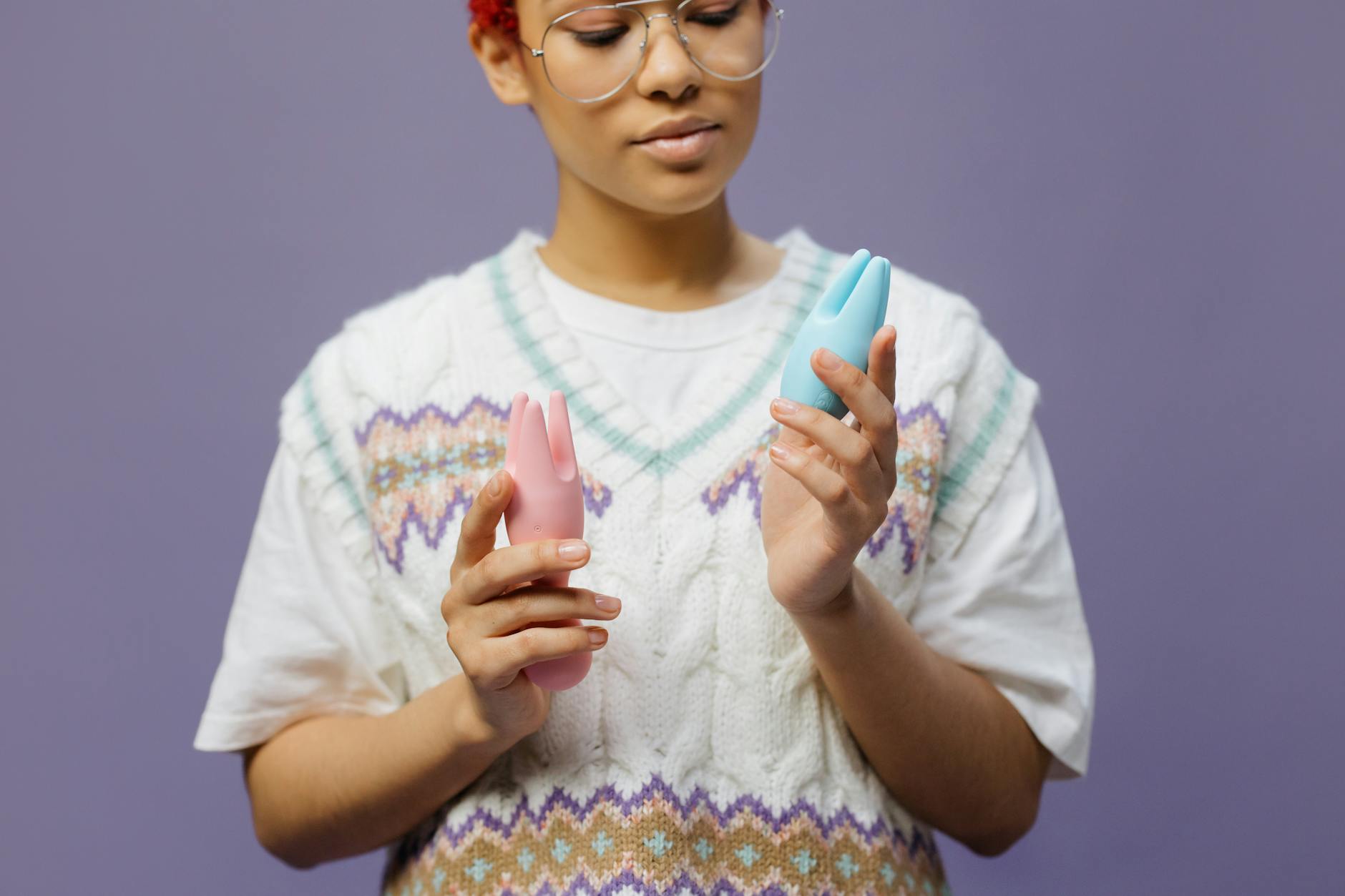
I work with people who've spent decades thinking their pleasure is fading when really they've just been using tools designed for someone else's neurology. A lemon vibrator (specifically, a suction-based clitoral stimulator like the Lem) often works better as sensation changes because it operates on a fundamentally different principle than traditional vibration.
Why sensation actually changes as you age
Three things happen physiologically. First, the clitoral glans loses some of its external visibility as estrogen drops, meaning the nerve-dense tip becomes slightly less accessible to direct pressure. Second, the skin around the vulva thins, so intense friction can feel uncomfortable even when pleasure is still absolutely possible. Third, your nervous system's speed of processing drops incrementally, which means rapid-fire vibrations can feel blurry instead of defined.
Here's the part that matters: none of this stops orgasms. It changes how they feel. Many of my clients describe orgasms after 50 as more full-bodied, more concentrated, sometimes longer. The pathway just shifted.
Why lemon vibrators win when sensation changes
A traditional vibrator creates pleasure through oscillation. It goes back and forth thousands of times per minute. As tissue sensitivity shifts, that speed can feel like noise instead of signal. Suction works differently. It creates a gentle seal and pulse around the clitoris rather than vibrating directly against it. This matters because suction stimulates the entire clitoral body, not just the glans.
When you age, your clitoris becomes more of a full-body system and less of a surface-level responder. Suction leverages that perfectly. It's why so many people report that a lemon vibrator delivers the most satisfying orgasms of their lives in their 50s and beyond.
Additionally, suction doesn't require the tissue to be perfectly positioned for contact. If the clitoris has retracted slightly, suction still works. If direct pressure feels too intense, suction distributes stimulation across a wider area. It's biomechanically smarter for aging bodies.
How to restart with suction if you've only used vibrators
If you've spent 20 years with traditional vibrators, the Lem will feel startlingly different. That's normal. Your body needs about three to four sessions to recalibrate. Here's the protocol:
Start on the lowest setting (Pattern 1 or 2) for five minutes. You're not chasing an orgasm yet. You're teaching your nervous system what this sensation is. Your brain will probably say "this feels weird" before it says "this feels good." Both are correct.
After three solo sessions, you'll notice the sensation sharpens. The "weird" fades. By session four, most people find a pattern that clicks. Don't rush this. The payoff is that once your body learns to read suction, traditional vibration often feels primitive by comparison.
Which patterns work best when sensation shifts
Here's what I've observed across hundreds of conversations: people who've experienced age-related sensation changes often prefer the mid-range patterns on a lemon vibrator (typically Pattern 3 to Pattern 6 on devices with multiple settings) rather than the intensest option.
Why? Because those patterns create rhythm without overwhelming the nervous system. The pulse is defined. Your brain can track it. Low patterns (1-2) feel too gentle for most people past 50 unless they're dealing with pain or extreme sensitivity. The highest patterns can recreate that blurry vibration-feeling if your nervous system is processing speed has slowed slightly.
Start with Pattern 4. Spend a full minute there. If it feels good, you've probably found your baseline. If it feels muted, move up one pattern. If it feels janky or uncomfortable, drop back one.
The warm-up shifts as you age too
Arrangement actually matters more than it used to. When you were 30, maybe foreplay was optional. Now it's structural. Your body needs 20-30 minutes to reach full arousal, and that's not a bug. It's a completely normal transition.
Spend real time on mental arousal. Read something that works for you. Get into fantasy. Let your brain do the heavy lifting for 10-15 minutes before the lemon vibrator ever comes out. Your nervous system will thank you. Clitoral response time shortens dramatically when mental arousal is handled first.
Warm water also changes everything. A warm bath or shower for 10 minutes before solo time increases blood flow to the entire pelvic region. When you've got good circulation, sensation sharpens. It's a small detail with an enormous payoff.
Lubrication matters differently when tissue changes
You might not need lube at 25. You absolutely probably do at 55. This isn't shameful or weird. It's just biology. Tissue thinness means friction matters more, which means lubrication stops being optional.
Water-based lube is your friend. Silicone lube feels richer but can degrade silicone toys. A quality water-based lube creates a protective layer that makes the sensation of suction feel even more defined because there's no micro-friction distracting your nervous system. Apply generously. Reapply halfway through if sensation starts to feel draggy.
If suction ever feels uncomfortable, 90% of the time it's a lubrication issue, not a device issue. Add lube first. See if the sensation improves. Usually it does.
Pelvic floor relaxation becomes the secret superpower
Here's something nobody talks about: pelvic floor tension increases as we age. Kegels are good for strength, but strength without release is actually a limiter. If your pelvic floor is clenched, suction can't do its best work.
Before you use a lemon vibrator, spend five minutes on pelvic floor release. The simplest version: lie on your back, knees bent. Breathe in through your nose for four counts. As you exhale, consciously relax your pelvic floor. It's the opposite of squeezing. If you've never done this, it can take a few sessions to figure out. But once you feel that release, orgasms often deepen immediately.
This is especially true if you've been holding stress in your pelvic floor for years (which most of us have). Aging actually gives you permission to unclench that tension in ways younger bodies skip right over.
Why desensitization is rare but fixable if it happens
Occasionally, someone uses a lemon vibrator regularly for months or years and starts noticing the sensation feels less intense. This is real, but it's fixable. Desensitization usually means either you've locked into one pattern and your nervous system has tuned it out, or you're using the device too frequently.
The fix is simple: rotate patterns. Don't use Pattern 5 every single time. Alternate between Pattern 3, Pattern 5, and Pattern 6. The variation keeps your nervous system engaged. If you're using the lemon vibrator more than four times per week, dial it back to three. Your nervous system needs recovery time.
If you've been using it daily for six months, take a week off completely. Then return on a rotating-pattern schedule. Most people find their sensation sharpens back up within two weeks.
When to get a specialist involved
If you've been following this protocol for four weeks and still feel no arousal or sensation, it's worth talking to a gynecologist who specializes in mid-life health. Sometimes low sensation is a signal that testosterone is lower than ideal, or that a topical estrogen treatment could help tissue responsiveness. These conversations are normal and worth having.
Pain is never normal. If suction causes discomfort even with lubrication, that's also worth a professional check. It could be pelvic floor tension that needs physical therapy, or it could be tissue changes that respond well to specific treatments. The point is: pleasure should feel good. If it doesn't, get it checked.
FAQ: When sensation changes with age
Can a lemon vibrator work if I've lost most sensation?
Yes. Suction stimulates a wider nerve pathway than traditional vibration, which means it often reaches sensation even when direct pressure doesn't. Start with Pattern 3 or 4, use warm-up time, and give your nervous system 3-4 sessions to recalibrate. If after that you still feel nothing, get checked by a gynecologist. Sometimes sensation loss signals something fixable like low testosterone or pelvic floor dysfunction.
Is it normal for orgasms to feel different after 50?
Completely. Orgasms often become more full-body and less clitorally localized. The buildup might be slower but the release can be more intense. Different doesn't mean worse. Most people report preferring post-50 orgasms to earlier ones once they stop comparing.
Should I use the lemon vibrator more often to rebuild sensation?
Actually no. More frequency can numb your nervous system faster. Stick to 2-4 times per week on a rotating-pattern schedule. Your nervous system needs recovery time, especially if sensation has been fading. Quality beats quantity.
Does age affect which lemon vibrator pattern is best?
General pattern: people under 35 often start at Pattern 5-7. People 35-50 often prefer Pattern 3-5. People over 50 often gravitate toward Pattern 3-4. But this is a rough guide. Your body is unique. Experiment across the range and see what your nervous system says.
Can I use a lemon vibrator if I have vaginal atrophy?
Yes, with care. Vaginal atrophy (tissue thinning from low estrogen) means you need extra lubrication and possibly a longer warm-up. You might also want to talk to your doctor about topical estrogen cream, which genuinely changes tissue responsiveness. But the lemon vibrator itself is often easier on sensitive tissue than other toys because suction distributes pressure instead of concentrating it.
What if I feel nothing even with good technique?
Give it time, but also get checked. Sometimes sensation loss signals hormonal imbalance, pelvic floor dysfunction, or medication side effects (like antidepressants). A gynecologist can run simple blood work and give you options. You deserve to feel pleasure. If something's in the way, it's often fixable.
The real ending
Aging changes sensation. It doesn't end it. The people who experience the richest pleasure in their 50s, 60s, and beyond aren't the ones chasing the sensation they had at 25. They're the ones who figured out what their bodies actually need now and built their practice around that.
A lemon vibrator is a genuinely smart tool for that shift because it works with aging bodies instead of against them. The suction principle is literally designed for the neurological patterns that emerge as you age.
Your pleasure hasn't faded. You've just been listening to it in the wrong frequency. Time to tune in.